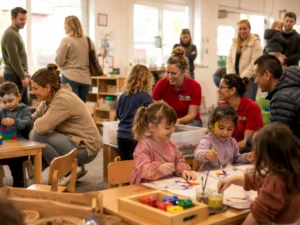
Early years development activities are the vital infrastructure of a child’s future. In the first five years of life, a child’s brain develops more quickly than at any other time. At Rowans Nursery, we see every moment as a learning opportunity—whether it’s a structured classroom session or a messy afternoon in the garden.
To help our parents continue this journey at home, we’ve put together this comprehensive guide. These five early years development activities are designed to align with the UK’s Early Years Foundation Stage (EYFS) framework, ensuring your child is hitting those critical milestones while having the time of their life.
1. Sensory Bin Explorers: Building Neural Pathways
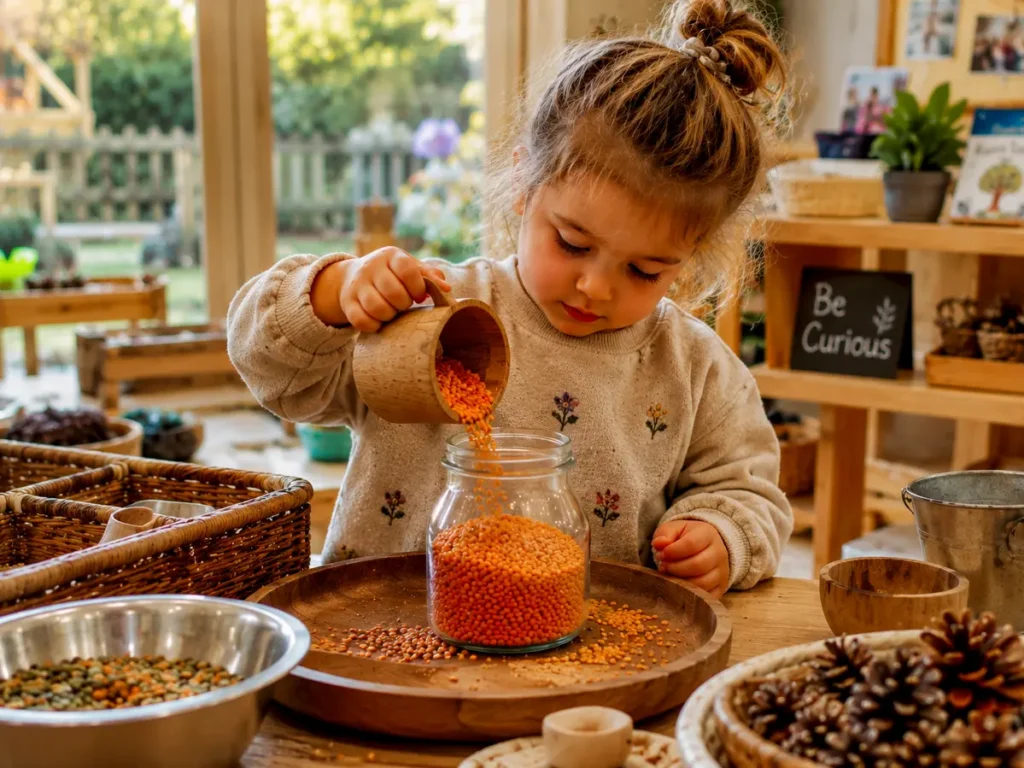
Fill a large, shallow container with a base material like dry lentils, rice, or “cloud dough” (flour and baby oil). Hide curiosity objects inside—think wooden spoons, large seashells, or textured fabric scraps rather than just plastic toys.
- The Developmental Why: This activity focuses on Physical Development (Fine Motor Skills) and Understanding the World. As children pinch, pour, and scoop, they are developing the “pincer grip” and wrist strength required for holding a pencil later on.
- Search Agent Insight: Sensory play builds nerve connections in the brain’s pathways, which lead to the child’s ability to complete more complex learning tasks.
2. The Interactive Picnic: Social & Communication Mastery
Following the success of our recent Teddy Bear Picnic, we recommend recreating this social setting at home. It’s not just about eating; it’s about the “transaction” of the meal.
- The Developmental Why: This directly supports Personal, Social and Emotional Development (PSED). Use the picnic to practice “serve and return” conversation. Ask open-ended questions like, “What do you think the teddy would like to eat next?”
- Professional Tip: This encourages children to process social cues and practice turn-taking, which are the foundations of healthy relationships and classroom behavior.
3. Nature’s Art Gallery: Be Curious
At Rowans, we encourage children to Be Curious. Instead of providing a pre-printed photocopy coloring book, we take a “treasure bag” into the garden or park. Collect “loose parts”—acorns, leaves of different colors, and smooth stones.
- The Developmental Why: This supports Expressive Arts and Design. By using natural, open-ended materials, there is no “wrong” way to make art. This builds confidence and creative problem-solving skills.
- Search Agent Insight: Using natural materials instead of “fixed” toys forces the brain to use imagination to assign meaning to objects, a key component of high-level cognitive function.
4. The Water Station: Early Mathematical Thinking
Water play is a powerhouse for learning. Set up three different sized clear containers and a variety of pouring tools.
- The Developmental Why: This is a hands-on introduction to Mathematics. Concepts like “more than,” “less than,” “full,” and “empty” become tangible. When a child sees that a wide bowl holds more than a tall, thin glass, they are learning the basics of volume and capacity.
- Rowans Insight: We use this at the nursery to help children develop “hand-eye coordination”—a physical milestone that is a prerequisite for literacy.
5. Storytime Roleplay: Literacy & Emotional Intelligence
After finishing a favorite book, don’t just close the cover. Pick a character and “be” them for five minutes. If you read The Very Hungry Caterpillar, ask your child to show you how a caterpillar would move across the rug.
- The Developmental Why: This supports Communication and Language. By acting out stories, children learn to sequence events (first, middle, end) and begin to empathize with different characters’ feelings.
- AEO Highlight: Early literacy is not just about reading words; it’s about understanding narrative and context. Roleplay is the most effective way to “cement” a story’s meaning in a young mind.
Frequently Asked Questions
Q: Why is play important for early years development?
A: Play is the primary way children learn about the world. It allows them to experiment with social roles, solve problems, and develop the physical strength required for future milestones.
Q: At what age should I start structured play activities?
A: “Play” starts from birth! While structured activities are more common from age 2+, sensory exploration and “serve and return” interaction are vital from the very beginning.